

There is a familiar order of operations in ecommerce growth planning. Fix the funnel, then buy traffic, then work on retention when there is budget left. Retention is the item that gets moved to next quarter.
For specialty retail that order is backwards, and the reason is arithmetic rather than sentiment.
What the Numbers Say About Standing Orders
Subscription customers show roughly 4.1x higher lifetime value than one-time buyers, with twelve-month retention near 45% against 15%. Consumable categories reach 30–45% repeat rates on natural replenishment cycles alone — before any programme, incentive or email sequence is applied.
Read that last figure again. A meaningful share of your catalogue gets rebought on a predictable schedule whether you do anything about it or not. The only question is whether the rebuy happens on your site or somebody else’s, and whether the customer has to think about it.
Then there is the finding that should change how the feature gets designed:
59% of subscribers say they prioritise convenience over price.
A discount helps a shopper over the line the first time. The durable reason people stay subscribed is that they have stopped having to think about it. Design for the removal of the task first, and treat the discount as the incentive to try it — not the reason to keep it.
Most subscription implementations do the opposite. They lead with “save 10%,” bury the mechanics in an account area, and then wonder why churn tracks so closely to the discount period.
The Customer Your Manual Process Punished Most
If you still take repeat orders by phone, email or form, there is a specific injustice in your operating model that is worth staring at.
The customer who buys the same thing every month is your best customer. Under a manual process, they are also the person doing the most work — repeating the entire enquiry, callback, confirm and pay loop, twelve times a year, to acquire something they had already decided to buy the first time.
At the published $30–80 per manually processed order, that single customer costs you several hundred a year in handling for a purchase that required no persuasion at all. We go through that arithmetic in your order form is costing you $30–80 an order.
The manual process taxes loyalty. That is a strange thing to discover about a business, and it is very common.
How We Designed It on Gutta på Haugen
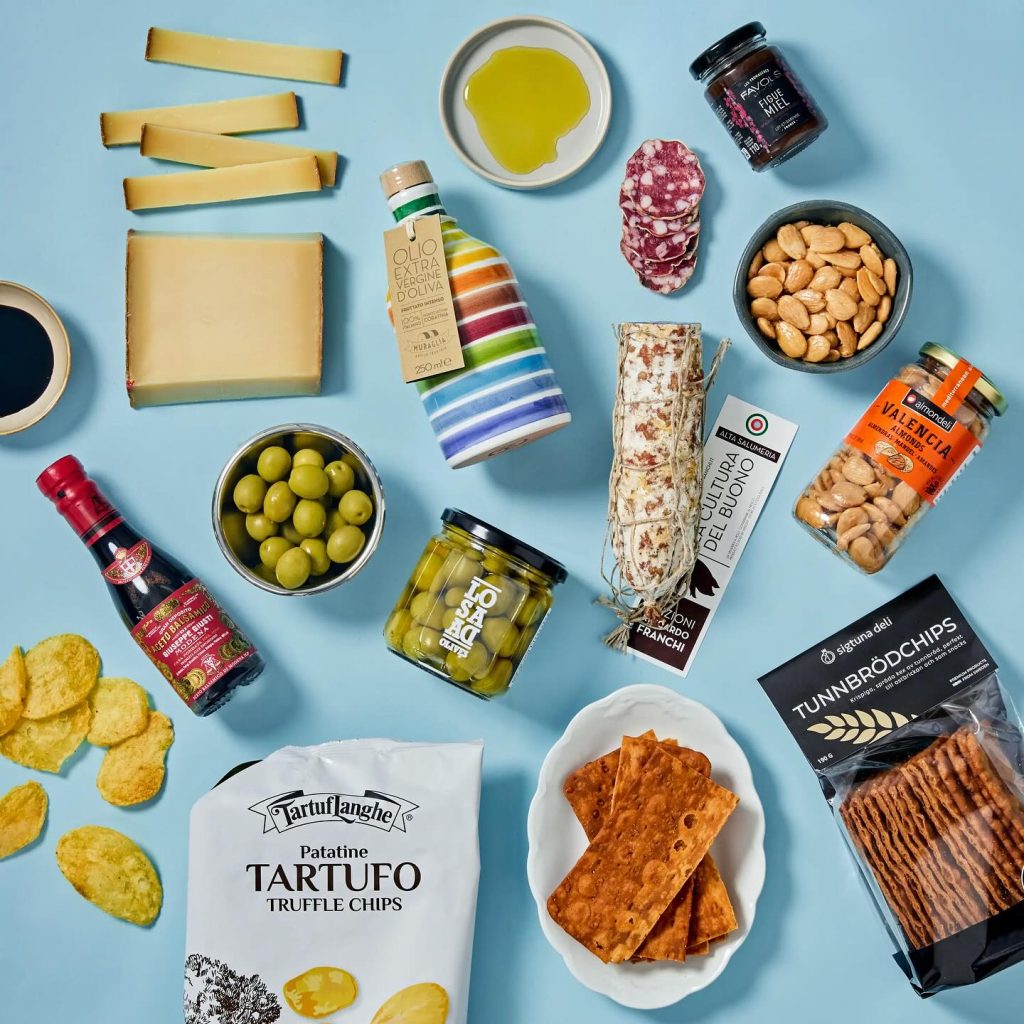
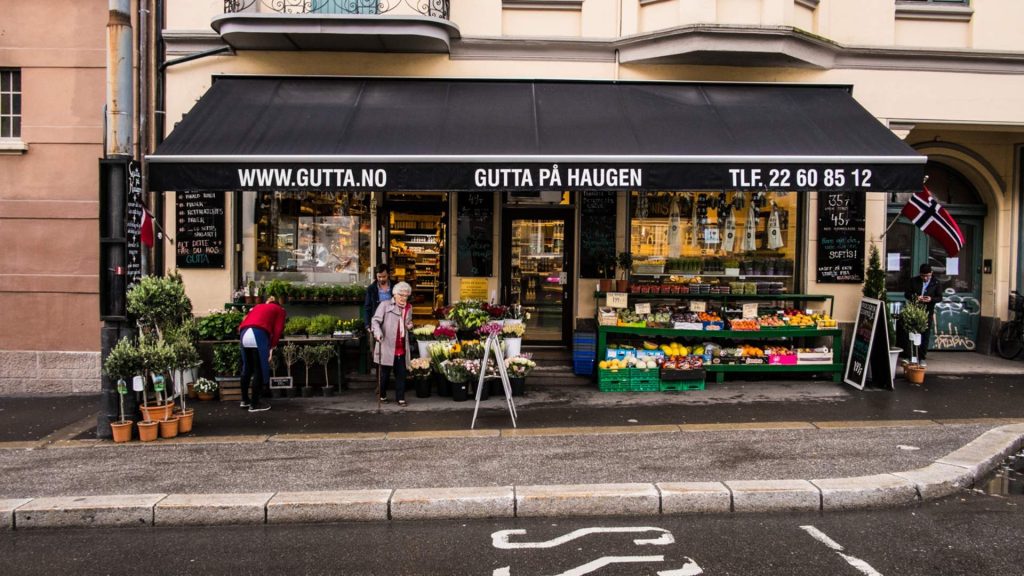
Gutta på Haugen is an Oslo delicatessen, trading since 1994, whose website was a form and a callback until we replaced it. Part of the catalogue is staples — things a household rebuys monthly.
Under the old model, that meant repeating the entire form-and-phone-call loop every single month: the worst case of the manual process, suffered by the most loyal customers.
The buy area offers a plain radio pair — One Time Purchase, selected by default, or Subscribe & Save — sitting directly above Add to Cart. Checkout then splits the total into what is due today and what recurs.
The designer’s reasoning, verbatim:
“Some items needed to be bought every month so instead of repeating the task the users can subscribe and as an incentive they would also get a discount. This also helps the shop lock in that customer for a long period.”
Note the order of that sentence. Removing the task comes first; the discount is second, described as an incentive. That happens to match the convenience-over-price finding above, which is not always how subscription features get argued for internally.
Two design decisions in there are worth pulling out.
It is offered at the point of decision. The choice sits in the buy area, at the moment the customer has decided they want the product — not in an account area they would have to discover, and not as a post-purchase upsell email. If subscription is a real proposition, it belongs where the purchase decision happens.
One-time is the default. The subscription is presented as the better-value alternative rather than the pre-selected option. Pre-selecting a recurring charge converts better in the short run and generates the cancellation, the chargeback and the review that costs more than the order was worth.
On evidence. No subscriber count or repeat-rate data was captured for this project, and we are not going to imply otherwise — the same discipline we apply throughout the whitepaper. The figures on the results page are revenue and paid-media figures from Kilowott project reporting; none of them isolates subscription contribution.
The Checkout Detail Most Implementations Miss
Subscriptions create a specific comprehension problem at payment: the customer is agreeing to two different things at once, and the interface usually shows them one number.
The pattern that works is the one we used — split the total explicitly into due today and future payments, before the payment button. It is a small piece of interface that does three jobs:
- It prevents the “I thought that was a one-off” support ticket
- It removes the strongest argument a customer has in a dispute
- It makes the recurring commitment legible at the moment it is made, which is the only honest place to make it legible
Subscription revenue that a customer did not fully understand agreeing to is not retention. It is deferred churn with a chargeback fee attached.
There is a systems consequence too. On this project, loyalty points are surfaced in three places — against the product price, in the cart, and at checkout — which means three interfaces that have to agree with a scheme whose balance lives somewhere else. Anything carrying a balance across channels raises the same class of problem, and it is worth reading alongside one card, two tills.
Where To Start
List what gets rebought. Your order history already contains the answer. Any SKU with a repeat interval clustering around a month is a replenishment candidate, and there are usually more of them than the merchandising team assumes.
Ask what the standing orders were. If staff took repeat orders by memory, those customers and cadences are known. That is the same institutional knowledge we go after in ask what they phoned up about.
Design the pause and the skip before the signup. Every subscription that fails does so at the moment the customer wants to change something and cannot. A visible pause, skip and reschedule is retention infrastructure, not a nice-to-have.
Put the offer where the decision is. Buy area, above Add to Cart, next to a one-time option. Not in the footer, not in an onboarding email.
Replenishment is the least glamorous revenue in specialty retail and the most durable. It is also the only growth lever that gets cheaper as it works, which is worth remembering next to the paid-media numbers in what 4.24x blended ROAS actually looks like.
The standing order was one of eight jobs the counter staff performed without anyone writing it down. The full inventory is in the counter problem, and the intent-attached merchandising argument in the recipe page is a storefront is the same instinct applied to a different moment.