

Results · Ecommerce build & performance marketing
From phone orders to a national online store
A 1994 Oslo delicatessen whose website was a form and a callback now trades online across Norway.
The starting point
The website was a form. The checkout was a person.
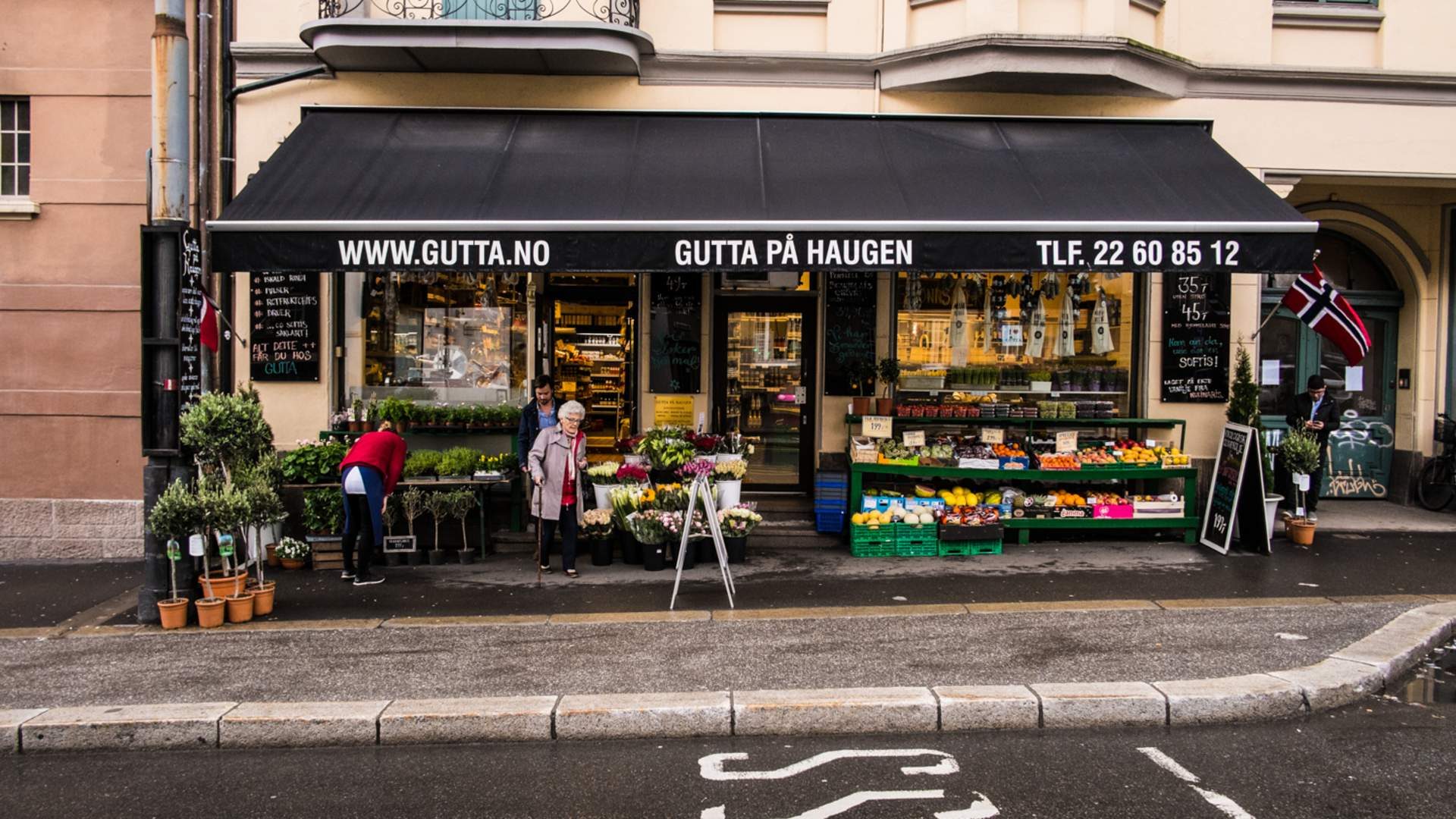
Gutta på Haugen has sold specialty food in Oslo since 1994, across several branches, with a reputation built on a range that is genuinely hard to source. What it did not have was a shop you could buy from.
The site carried a form. A customer described what they wanted, an employee read it, telephoned them back, completed the purchase verbally, took payment offline, and arranged shipping. Every order consumed a member of staff. The catalogue itself was, in the designer's words:
“A generic page with no design and products listed like a word document.”
Designer, Kilowott
The shop was already making sales this way — this was not a business starting from nothing. But the process had a hard ceiling and an obvious cost, and the pain point the client named was simply that it was slow.
On the baseline. Pre-rebuild online sales existed but were not quantified, and no before-figure is available. This page therefore describes the starting point rather than putting a number on it. The growth figures below should be read with that in mind — and not as growth from zero.
Why it mattered
Norway's most under-digitised category is also its fastest-growing
Norwegian online grocery reached only 5–10% of its category in 2025, against 10–15% for e-commerce overall — strong physical retail means the sectors where in-person expertise matters most have digitised slowest. The same category is now the fastest-growing segment of Norwegian e-commerce, at roughly 14.8% CAGR through 2030.
For a shop like Gutta, that combination is the whole opportunity: a national audience that increasingly wants to buy this way, and comparatively few specialty competitors who have built for it properly.
Market context: ECDB, Mordor Intelligence. Market data, not this project's results.
The strategy
Build the store the counter staff used to be, then put demand behind it
Two workstreams. The build had to absorb the jobs a phone call used to do. The media had to find people who did not know the shop shipped nationally.
Ecommerce build · WooCommerce
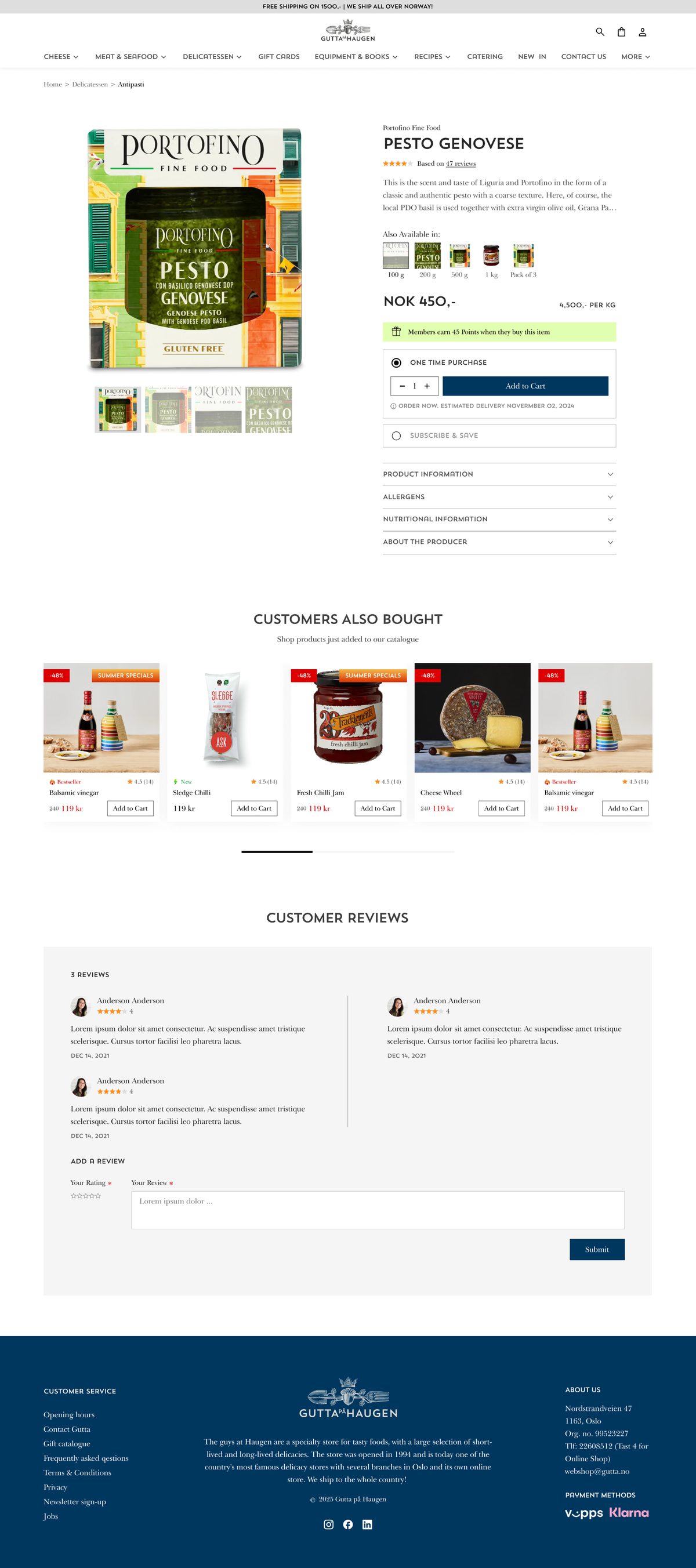
- Product pages carrying the producer, variants, delivery estimate, ratings and full product, nutrition and allergen detail — replacing what staff answered live
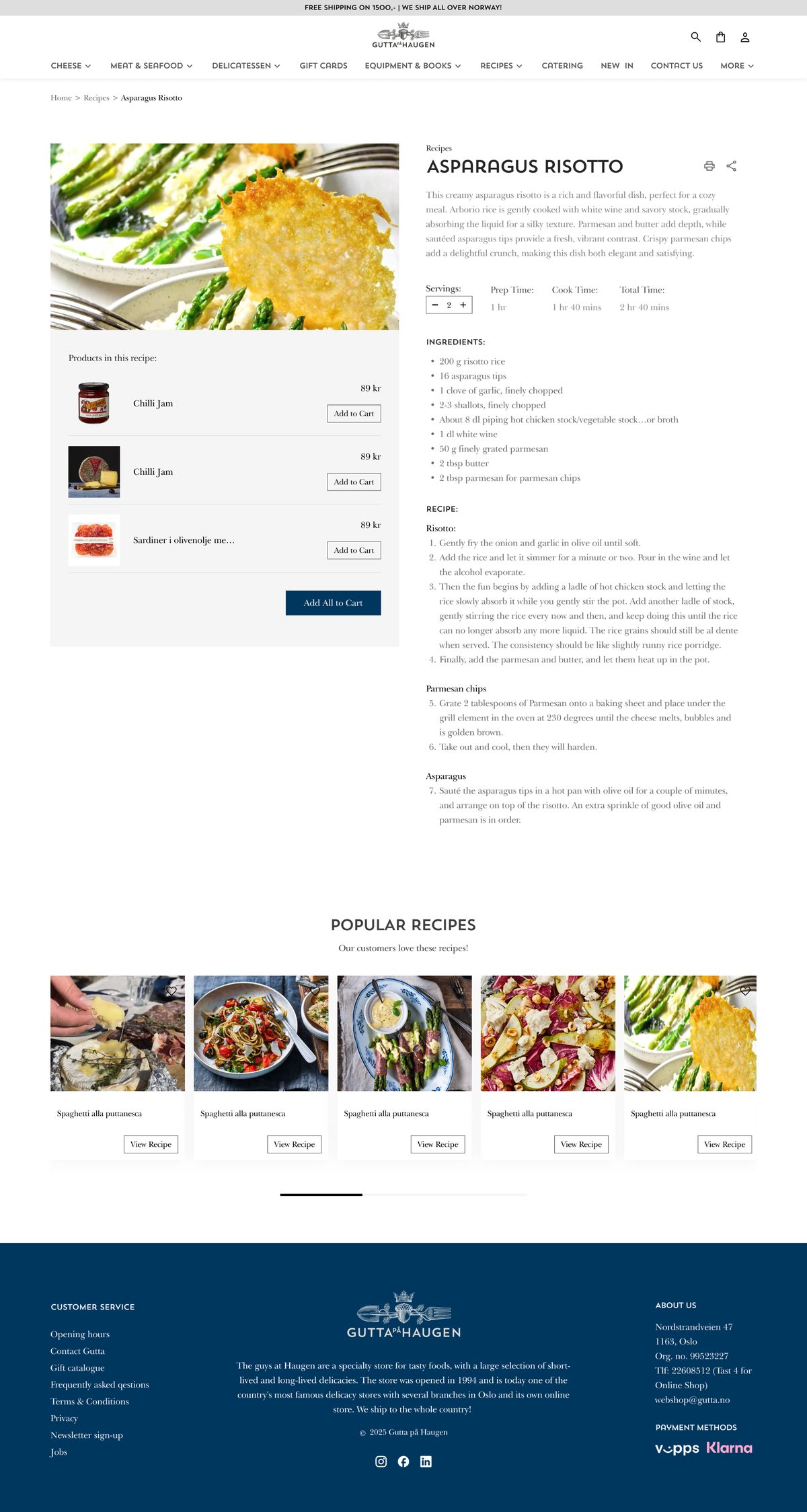
- Existing recipe content wired directly to buyable product cards
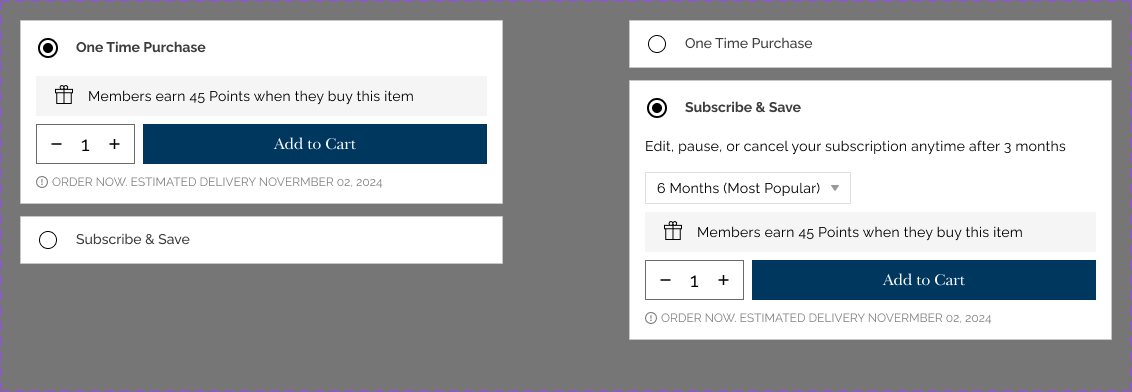
- Subscribe & Save for monthly staples, removing the repeat order entirely
- Gift cards honoured across both the shops and the web store
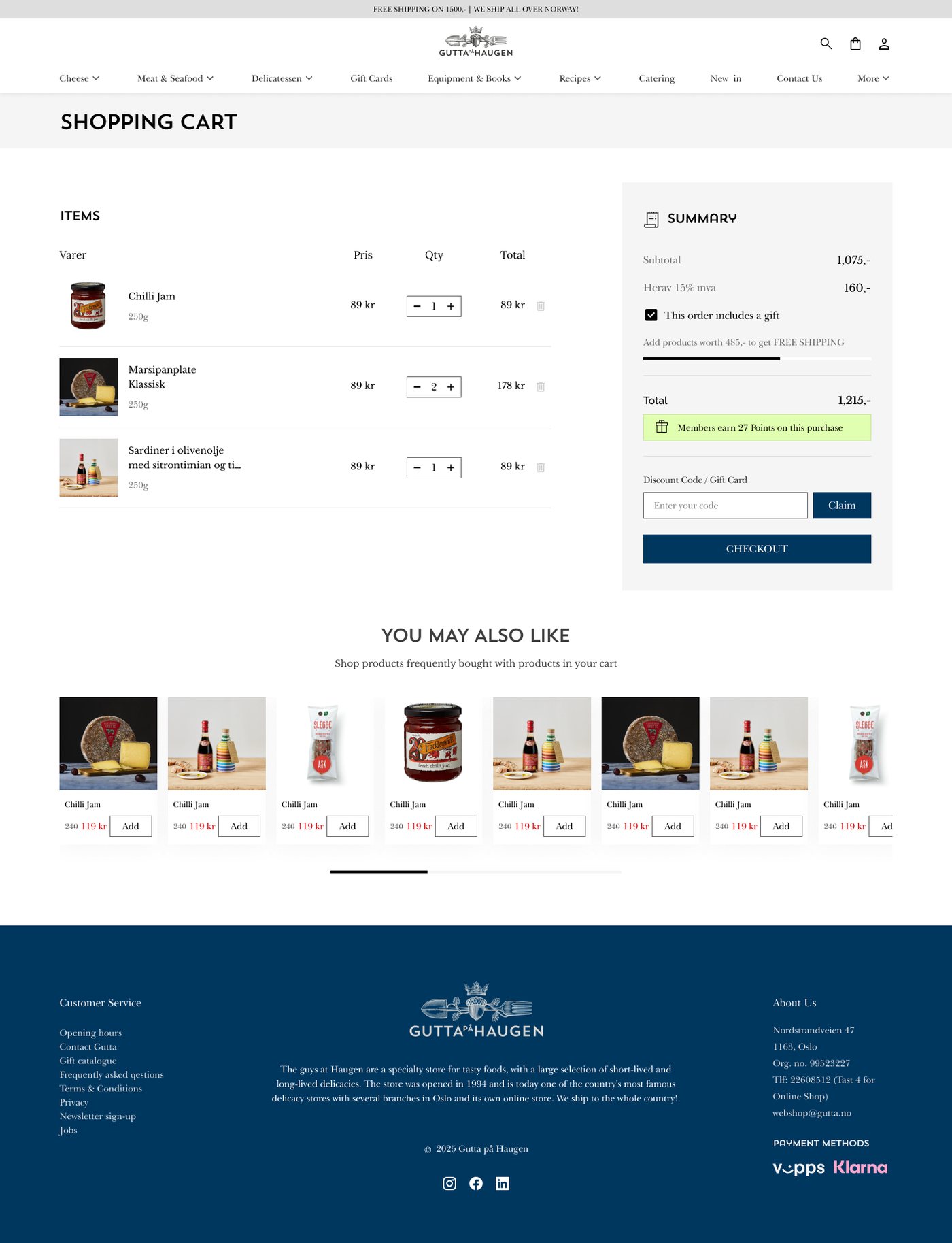
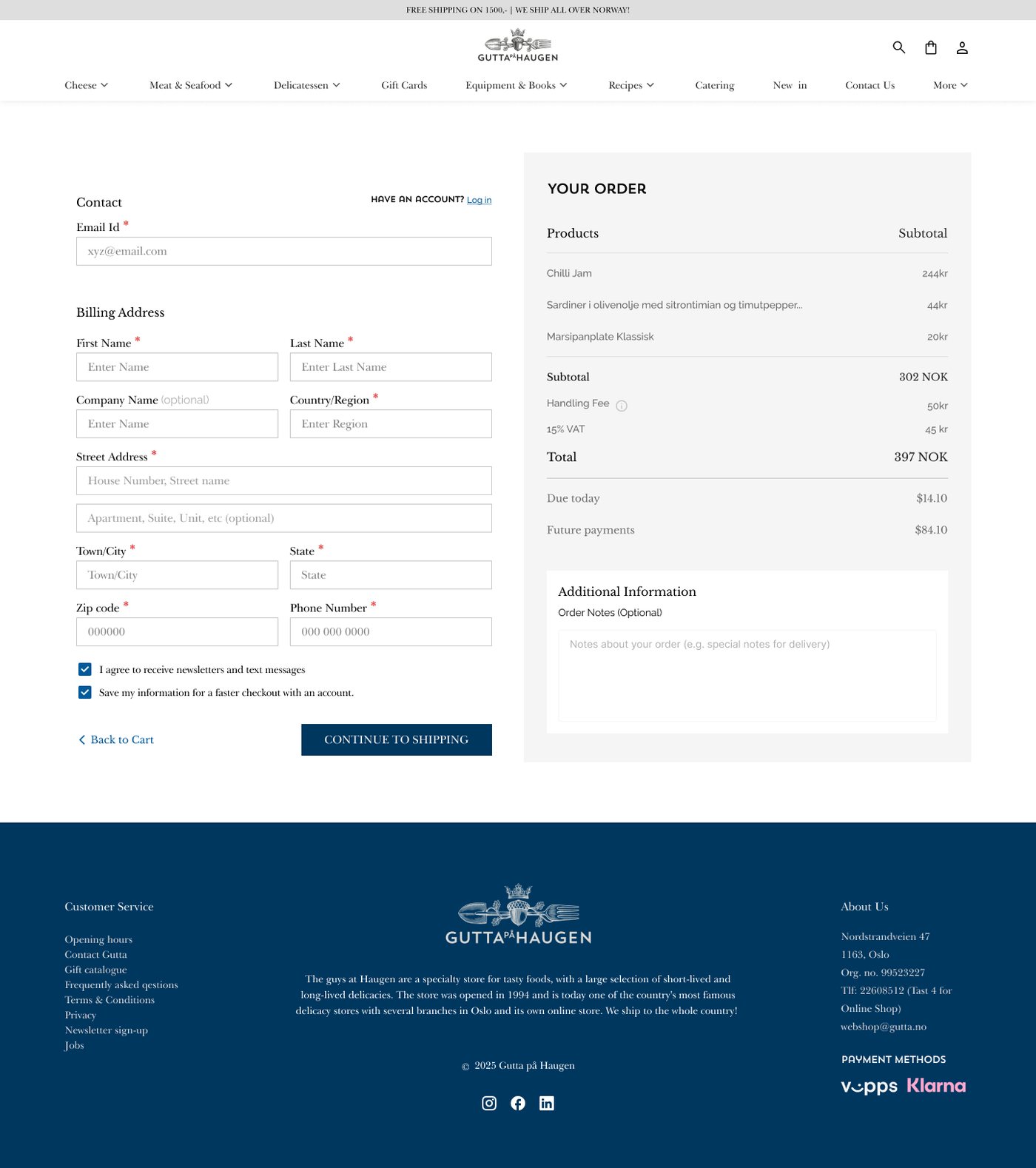
- A loyalty scheme surfaced at price, cart and checkout
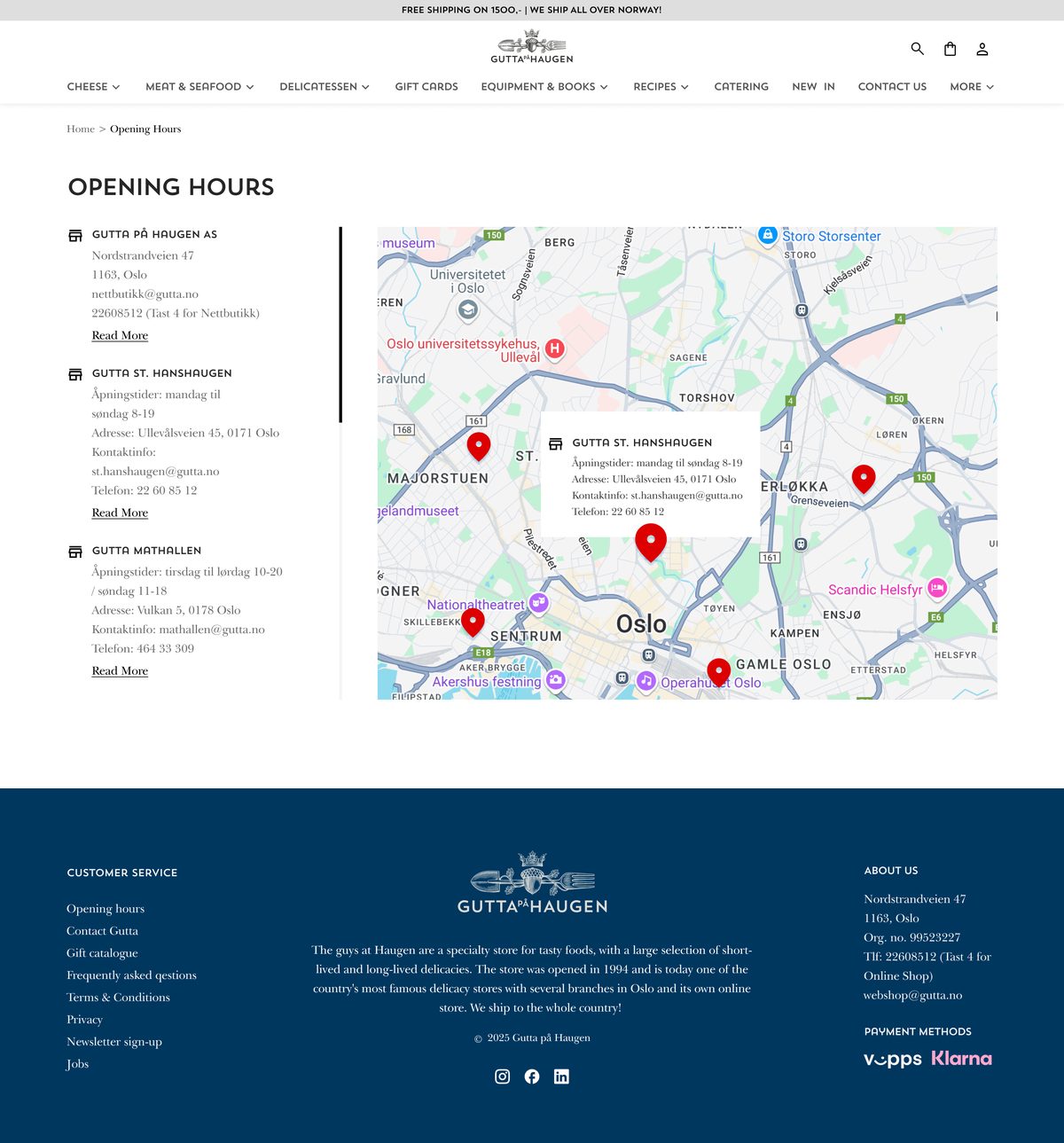
- A store finder covering the Oslo branches, with hours and map navigation
Performance marketing · Meta + Google
- A unified Meta and Google ecosystem capturing full-funnel demand
- Advantage+ and catalog sales driving awareness and product discovery
- Performance Max supporting mid-funnel discovery
- Branded and non-brand search, with remarketing capturing high intent
- Seasonal scaling across Christmas, Easter and Summer
- Campaign structure, creative rotation and feed optimisation aligned to the shop's own priorities
The proof
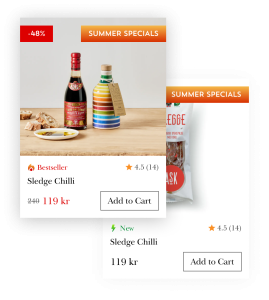
What replaced the phone call
The shipped interfaces, each carrying a job the counter used to do.
Results
Where it got to
Six figures, each carrying its source. No reporting period or media-spend base is published for this set — what that means for reading them is set out below the grid.
How to read these numbers. All six are provided by Kilowott from project reporting (August 2026). Kilowott does not have direct access to the client's analytics or advertising accounts, so none carries a platform-verified label such as GA4 or Meta Ads Manager. No pre-rebuild baseline figure is available.
What is missing, stated plainly. No reporting period is published, so the two year-over-year figures cannot be tied to specific years. No media-spend figure is published either, so the ROAS has no base a reader can audit against — 4.24x on a small budget and 4.24x on a large one are different achievements. Both are absent because they are not in the project record, and leaving them out is preferable to estimating them.
The one design outcome noted elsewhere on this page — that a lot of purchases come through the recipe flow — is reported by the client rather than measured, and is not included in the figures above.